Spring is definitely here now and the recent combination of longer, warmer days and rain means that vegetation around the country is growing quickly and densely. This may lead to the need to strim or clear vegetation, and whilst few of the plants in the UK are hazardous to work with in this way, there are some, including species of Invasive Non-Native Species, which also need to be treated extremely carefully. It is vital during vegetation clearance work to avoid contact with bare skin and eyes in the cases of these 4 plants as they are particularly problematic when they are cut. If these are present on your site, all workers clearing vegetation should be briefed and personal protective equipment thoroughly and regularly inspected.
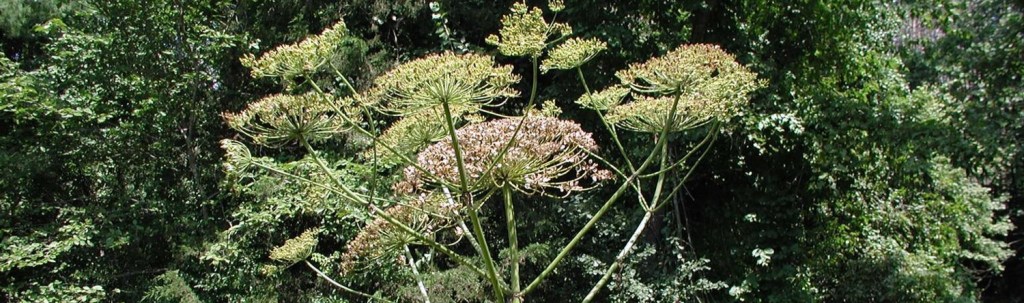
Giant Hogweed (Heracleum mantegazzianum) is a plant we have encountered a couple of times on our surveys, growing in large clumps in dampish soil. With red-mottled stems as thick as a wrists, and leaves of up to 100cm in diameter, these plants often grow taller than 3 metres high. The life cycle of this species spans several years with each year’s growth dying back in winter, only to regrow very rapidly from the established roots the following year. After between 3-5 years, the plant produces a flowering stem which can generate more than 20,000 seeds, before the plant finally dies. The sap of this plant causes the skin to become very sensitive to light and if exposed to sunlight will generate large blisters which take several days to heal and which can re-occur on later exposure to the sun. This plant is also classified as an Invasive Non-Native Species, the disposal of which must be controlled to avoid contamination of other land.
Common Hogweed (Heracleum sphondylium) is far more commonly found growing on areas of wasteland and can produce a similar reaction to sunlight as its much larger and potent cousin, the Giant Hogweed. Although some people cook and eat the leaves and stems of Common Hogweed, it needs to be treated with care when cutting or strimming to avoid sap affecting exposed skin.
Hemlock Water Dropwort (Oenanthe crocata) is most often found alongside streams, wet ditches or on damp ground. Although the sap is not as potent as that of Giant Hogweed, it has caused blisters on some people when in contact with bare skin.
Hemlock (Conium maculatum) is another giant plant which by late spring or early summer can tower over our heads. In its younger phases of growth, it can be confused with Cow Parsley (which is not poisonous), but Hemlock’s growth soon outstrips this smaller plant and it develops purplish blotches on the stems, which Cow Parsley doesn’t. All parts of the Hemlock plant are poisonous, particularly if consumed, but some sources suggest that the poisons can also be breathed in and that contact with the skin might also result in poisoning. We have only encountered this plant on one of our many surveys but, once again, this is a problem plant when it comes to strimming, mowing or other forms of cutting.
 JP Ecological Services
One thought on “Plants that can be Hazardous to Grounds Maintenance Teams”