
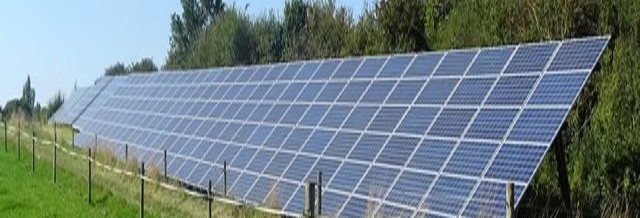
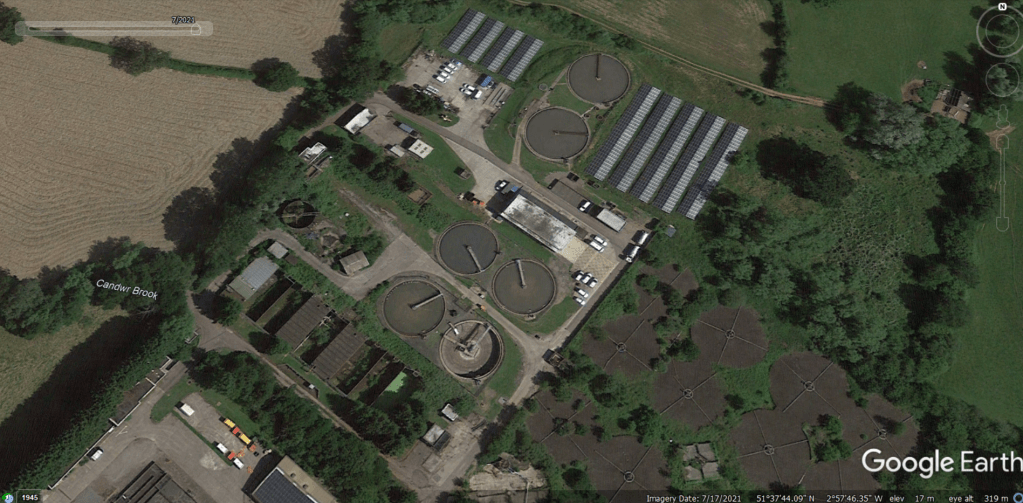
Our involvement with the installation of a solar panel array on waste ground, adjacent to the Welsh Water treatment works at Ponthir, began in May 2019, when we were asked to complete a Phase 1 Habitat report. A third-party Phase 1 report, completed the previous year along with a tree assessment, had led to changes in the design of the project layout and had also generated two questions, relating to the habitat classification and the suitability for Great-crested newts, from the county ecologist.
In addition, we undertook surveys for reptiles, potential bat roosts and invasive non-native species, as well as supporting contractors during vegetation clearance. We also provided advice on mitigation and biodiversity improvement measures for adoption as the project proceeded. Our involvement in this project was completed by October 2019, and it then concluded satisfactorily with the successful installation and commissioning of the solar panel array in the following months.
If you would like to find out how we could provide ecological support to your development project, please contact us.
Habitat Classification. The first of the county ecologist’s requests was to assess whether the area categorised as grassland in the previous Phase 1 report should be protected under the Environment (Wales) Act 2016. Our inspection revealed that the site had clearly been used historically as pasture land but had suffered from an extended period of neglect and currently had no active management plan. The area looked to have been semi-improved, damp, acid grassland which had been allowed to undergo succession across most of the site to a tall, rank, ruderal sward. Although a few small islands of grassland remained along the northern edge, even these were under threat from being over-run by the other habitats.
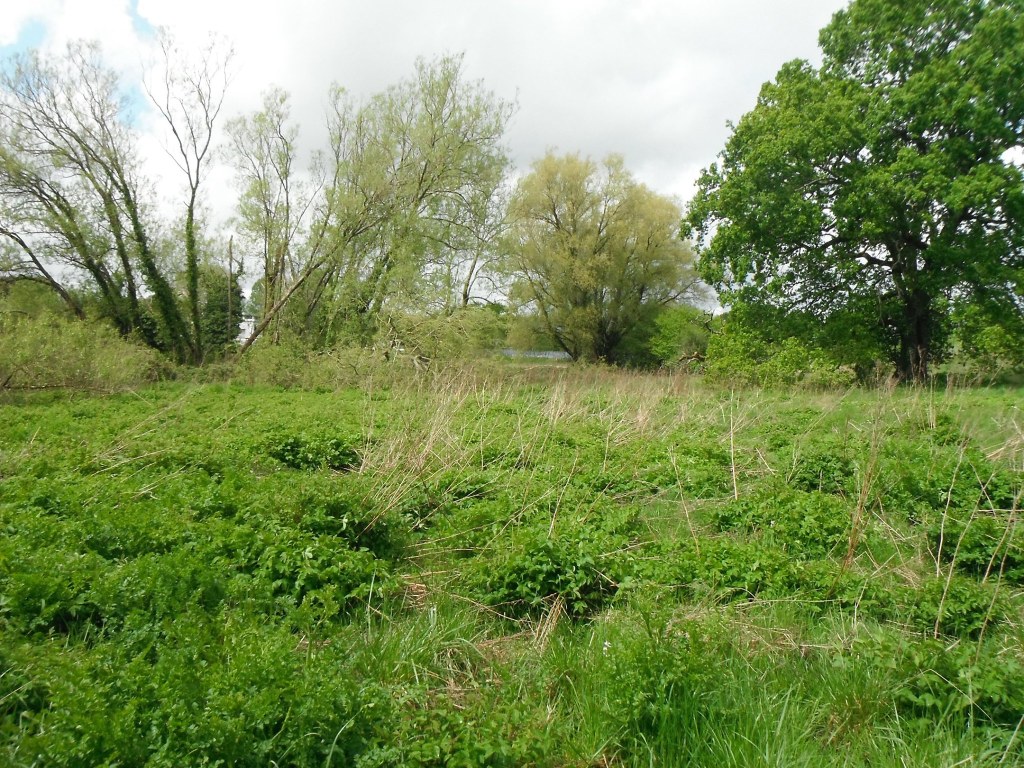
This first assessment therefore concluded that the small remaining grassland areas were remnants of semi-improved grassland typical of use as a pasture and that the dense growth of nettles and other rank species which covered most of the area meant that the site was not a habitat that merited protection under the Environment Act.
Great-crested Newts. The county ecologist had also requested feedback on whether the location was suitable for Great-crested newts, given the presence of several areas of standing water having been noted in the original Phase 1 report. On our second visit, therefore, we examined the ditches and areas where standing water had previously been noted, as well as reviewing how these features were linked to neighbouring water bodies. Our assessment determined that the ponds were very temporary features, possibly arising following the thaw of heavy snow falls, and had no potential for housing the newts, whilst the score attributed to the ditch, under approved Habitat Suitability Index protocols, fell well short of the levels for providing optimum habitat for Great-crested newts, although it might be suitable for hibernation during the winter. When this assessment was combined with the lack of any Great-crested newt sighting records within 2km, we concluded that there was very low likelihood that these newts were present.
Reptiles. Interestingly though, the check of local ecological records that we completed as part of our Phase 1 review indicated that Common lizards and Slow worms were both present within the general neighbourhood, and discussions with site staff suggested that they had several times seen “snakes” during their working day. Furthermore, during our first visit, we almost tripped over an adult grass snake basking in the morning sun on the grassy banks. Although initially coiled up and relaxed, with its tongue flicking in and out, it quickly slid off into the surrounding undergrowth and disappeared once it realised we were there. Given that there were also compost heaps (a favoured location for grass snakes and slow worms to lay eggs) not far away, it was agreed that we needed to undertake a specialist survey to assess the distribution and density of any reptile populations.
Firstly, the site was thoroughly checked for potential basking sites, and a path was mapped out to follow on future visits, so that these locations could be searched for snakes or lizards, with minimal disturbance to any reptiles that might be using them. In addition, 52 refugia panels were laid out at selected locations where patches of different habitat intersected and where they might be used by reptiles to warm up whilst under cover. On each subsequent visit, each of these panels was carefully lifted and the ground underneath photographed to record anything which was using the site; this required a careful approach and preparation to ensure we were ready to “snap” any inhabitants as soon as the panel was lifted – in spite of their names, Slow worms can remove remarkably quickly when disturbed, as can the other retiles and small mammals.
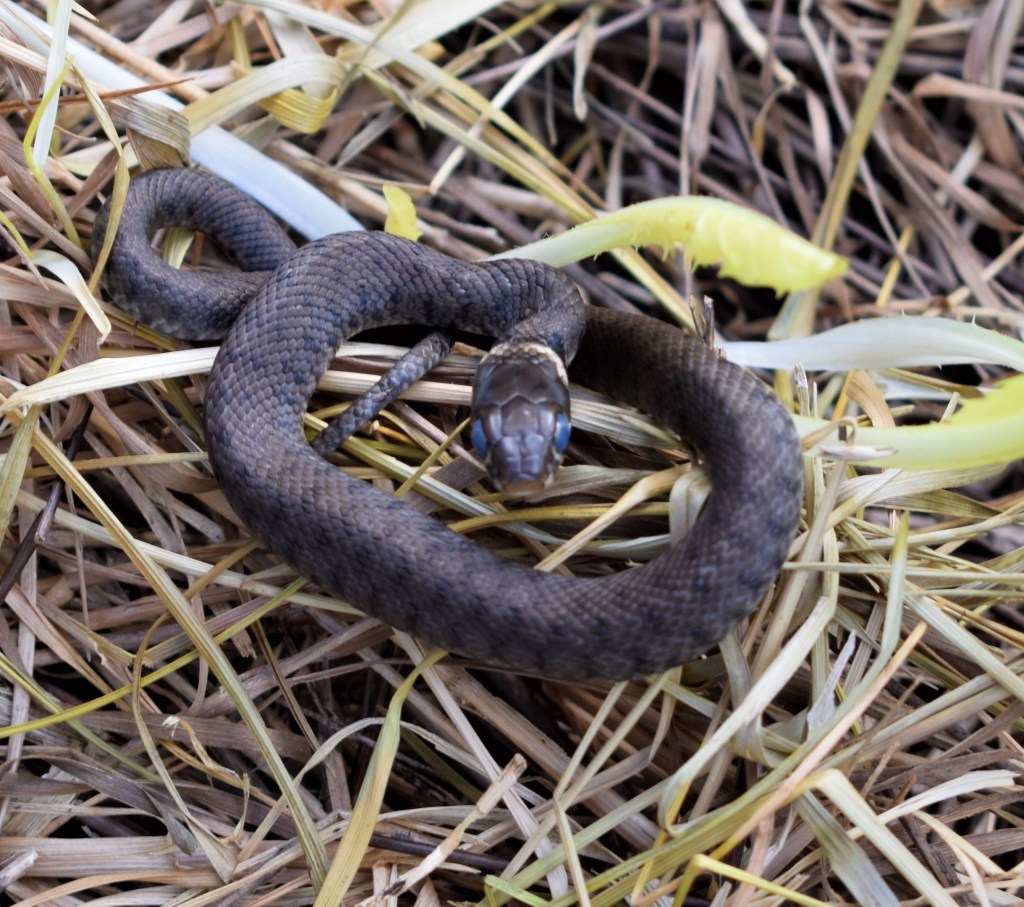
Unfortunately, reptiles will usually only be detected when the combination of rainfall, cloud cover, air temperature and wind conditions encourage them to rest for any significant time as they warm up. In addition, reptiles usually hide more during their breeding period, so choosing days when all conditions were satisfied was quite an art. Nevertheless, within 7 visits we had achieved the minimum survey effort required to confirm that Slow worms and Grass snakes were using the area, but that other reptiles were absent.
Ecological Clerk of Works Support. Subsequently, we provided ecological support during the vegetation clearance phase to guide the contractors on best practice strimming techniques and to advise on where the cuttings could be piled to avoid any immediate issues with the reptiles. Although we also offered guidance on types of barrier which could be installed if construction work was delayed, this option wasn’t required on this occasion. We also advised the site owner on how the ground around the panels could be managed following completion of the project to provide suitable habitats for continued use by reptiles.
Invasive Non-native Species. The combination of the above studies gave us ample opportunity to assess the area for the presence of Invasive Non-Native Species, and we prepared a map outlining the areas where the density of Himalayan Balsam was particularly dense and those it was spreading into.
Potential Bat Roosts. We also assisted in a potential bat-roost assessment of an elderly Crack willow tree, which because of its position needed to be felled, as part of our gaining additional bat survey licences. The tree was assessed as being clear of bats.
Our reports on all the survey work included the measures that need to be adopted to protect the reptile population and to prevent contamination of external areas from the Himalayan Balsam during the rest of the construction project. Mitigation measures, to offset the loss of the tree and scrub habitat, were included in our proposals as well as guidance on how to improve post-installation conditions for a variety of other wild creatures, including butterflies.
For similar information on other projects, please take a look at the Our Work page.
 JP Ecological Services
One thought on “Solar Power for Ponthir Water Treatment”