
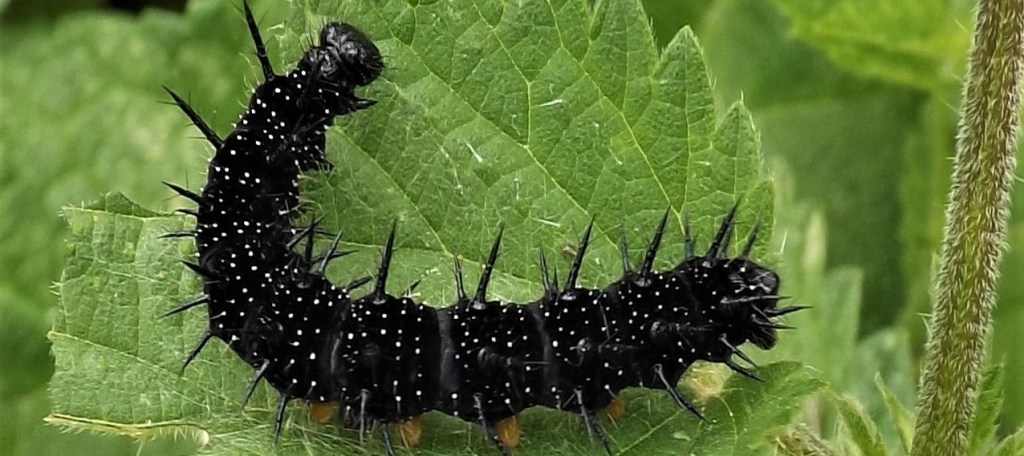
At this time of year, it seems that barely a day goes by without another opportunity being presented for us to celebrate nature, and whilst “Be Kind to Nettles week” might sound like a joke, it is actually a well thought through initiative launched by CONE, and supported by Butterfly Conservation and a number of Wildlife Trust branches. So here’s a bit of reasoning that might make the air a bit less blue the next time we stumble into a patch of the little stingers!
We encounter the Common Nettle on most of our surveys, and have even been spotted wading through huge seas of dense nettle growth on occasion, and we have to confess that in those instances, ‘kindness’ wasn’t necessarily the first thing to come to mind! But there is a reason that this robust little plant is often one of the first to the party when it comes to reclaiming ground. Powered from a network of tough fibrous roots, nettles erupt from the ground in early spring, and flourish almost everywhere but particularly in habitats enriched by the waste or fertilisers that man has spread.
The infamous ‘sting’ comes from hundreds of hairs acting like mini hypodermic syringes, ready to deter anything that attempts to eat it. Now we, as well as anyone, know that the good old nettle can be a little trigger happy with this defence; we have been stung on many an occasion on surveys, even when we had no intention of eating them (although there is always someone who will wave a recipe for nettle soup at you, attesting to how tasty and nutritious it is!). It’s this form of defence however that makes the plant so critical to more than 40 species of insect, including the caterpillars of some of our most beautiful butterflies, who can thrive within its canopy. Nettle patches are also a winter home for aphids, so important to ladybird larvae searching for an early meal. Further up the food chain, small birds like Blue tits forage around the fresh spring shoots unaffected by the stings and the seeds offer a late-summer snack.
Nettles are in fact so attractive to aphids and caterpillars that experienced veg growers will often leave them in situ to divert destructive insects away from legumes and brassicas.
Inevitably, the removal of nettles is sometimes necessary, but thankfully they are quick to grow back, so if there is a quiet corner of your site where they won’t get in anyone’s way, maybe we should be a bit kinder to nettles! Besides, they have been a part of British country life for so long, a walk wouldn’t be a walk without searching around for a dock leaf having stumbled upon a zealous nettle with the philosophy of sting now, ask questions later!
If you would like advice on how to improve the post-completion biodiversity of your development project, being kind to nettles and other wild plants, then please contact us.
For other posts of a similar nature, why not browse our website.
 JP Ecological Services