
Sometimes it can be tempting to regard certain surveys as a bit ‘run of the mill’; particularly when they deal with species that we have begun to take for granted as ‘common’. A good example of this are bird surveys; many of us have got used to seeing our birds adapt to life around people and development, so take for granted that they will simply continue to adapt. Many of these familiar little birds actually lead pretty spectacular lives, migrating long distances to follow the best climate, food sources and to raise young. Or simply trying to adapt to changing conditions. Surveys can help to identify where things are changing and what can be done to help.
Surveys such as for breeding birds or migrating birds can help protect vital food or nesting sites and on a national scale can help identify when the species that visit us seasonally change. It’s not always about declining populations; sometimes these changes bring visitors to our shores that we wouldn’t normally be privileged enough to see, and (Wally the walrus aside) some of these species can be seen in our back gardens and close surroundings.
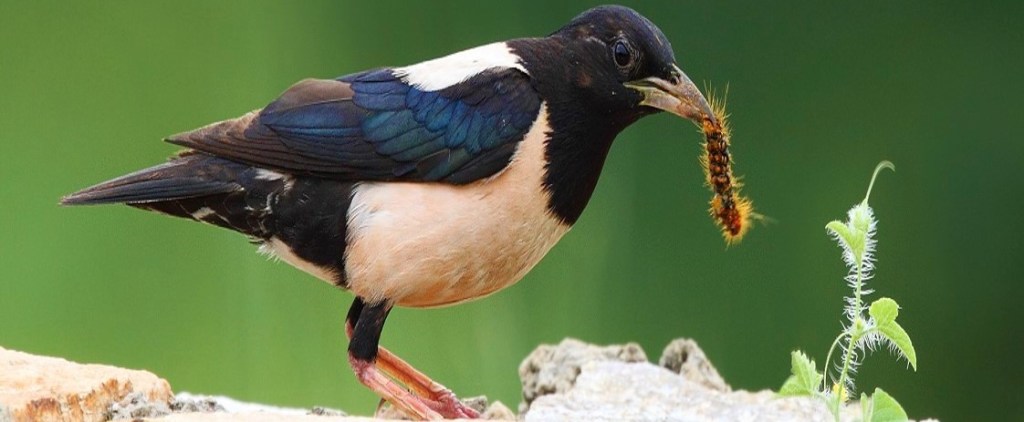
An example of this is the really quite pretty and unique looking Rosy Starling, who doesn’t usually spend time in the UK, preferring warmer climates, but in recent years has more commonly been spotted here. This year, there were initial sightings of these delightful birds landing in Cornwall, Dorset and Pembrokeshire on 31st May; the following day one was reported as far north as the Isle of Harris, Outer Hebrides. With the associated movements of several hundred birds into France and Spain, 2021 currently looks as if it will match 2018 in visitor numbers, although this year’s cold wet spring means that numbers might not reach the records set in 2002 or 2020.
Historically, the Rosy Starling has spent the cold winter months in the warmer countries around India, spreading out in spring to breed in the steppes and deserts of south-east Europe and central Asia. In north-western China, farmers noticed that the birds’ appetites for insects was huge, and since 1980’s they have installed artificial nests to encourage the birds to breed there, resulting in a very effective natural solution to locust plagues, and they have been able to reduce the amount of costly and polluting insecticides used as a result. Positive news for British bird spotters, gardeners and farmers alike but what has caused this change in behaviour?
Given that this starling usually thrives more than 1500 miles from the UK though, what brings them here now? Well, since the turn of the millennium, the birds have progressively colonised eastern Europe as a result of increased temperatures throughout the critical period of May and June, so the starlings have been creeping closer to us for a few years now. It is also thought that recent warmer spring/summer weather throughout Europe has encouraged birds returning from their winter homes to overshoot their usual summer habitats and to spread further west. With climate change continuing, it seems possible that Rosy Starling may become even more regular in its UK appearances at this time of year, particularly if warming continues.
As exciting as these visitors are, they are without doubt a signal of change (permanent or temporary?) to our climate and how species are being forced to adapt. These little birds’ appearance feels far less shocking than images of melting ice caps and emaciated polar bears. But the bottom line is that they indicate the same trend that the planet is warming, and we have a responsibility to develop our world conscientiously to minimise the adaptations we force on our wildlife. Otherwise we risk permanently changing our bio-diversity, no doubt to the detriment of many species.
Currently the UK record for Rosy Starlings is 182 reported birds, so the chances of encountering one is still quite low. Nevertheless, we shall be keeping our eyes skinned during our survey work around the countryside. If you come across any, we would love to hear about it – or even better, log it with Birdtrack https://app.bto.org/birdtrack/
 JP Ecological Services