
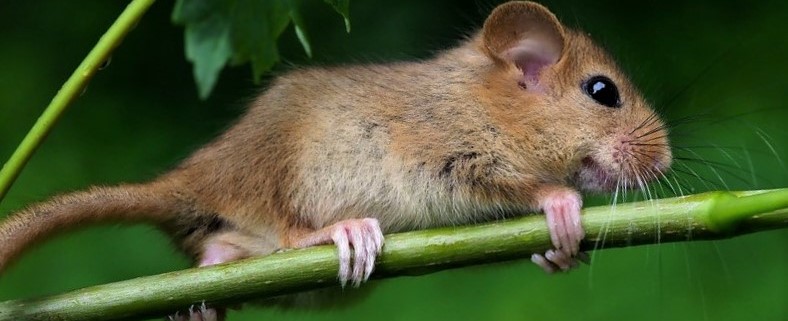
A few days ago, the People’s Trust for Endangered Species celebrated the release of its 1,000th dormouse into a wild environment; a major milestone for a breeding programme run by the Common Dormouse Captive Breeders Group. All the animals bred by this group pass through a 6-week health check and quarantine period, with either the Zoological Society London or Paignton Zoo, to ensure that they have the best chances of success once released. The animals are then initially held as mating pairs in large release cages within their new territories before being allowed to venture into the wild, with food being provided for the first 2 months of their freedom.
Although dormouse populations are currently relatively common in the counties along the southern coast of England, they also have smaller populations in counties throughout Wales, where our survey work has required occasional consideration of their presence. Disappointingly, we haven’t yet met one face to face. There are also scattered populations in the Midlands and parts of the south-east, and this reintroduction programme has sought to add populations around the borders of these existing ones.
Running since 1993, 86% of the releases have resulted in the dormice surviving in their new habitat over the first 2 winters before breeding in the third year, whilst 60% have established populations which have remained stable for between 5 and 10 years. Best of all, of course, 56% of the release sites now have dormouse populations which are considered to be long-term stable – a great success.
Unfortunately, not every woodland can be considered for inclusion in the programme, and it focuses on large wooded areas where suitable habitats exist and where links can be established with other existing or potential sites. In addition, success relies heavily on local volunteers helping to maintain the selected habitats and in monitoring the progress of these vulnerable creatures.
Given that the dormouse is now extinct in 17 counties where it historically thrived, this charming little creature needs all the help it can get. We wish the programme every success in the future and look forward to hearing more on its progress. Click here for more information on this programme.
 JP Ecological Services
2 thoughts on “1000th Dormouse Released”