
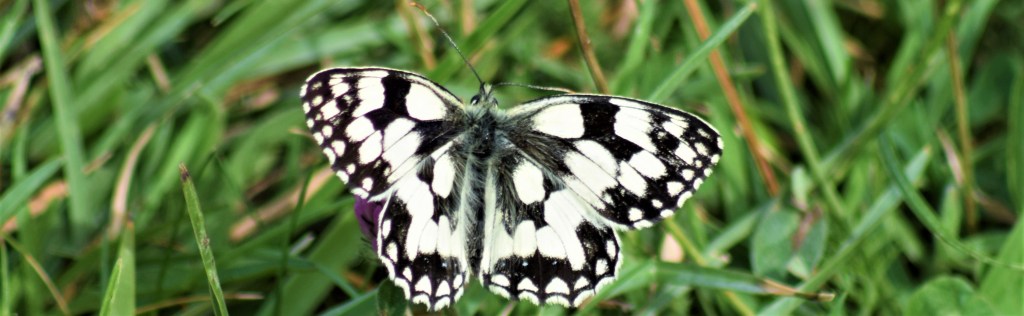
The imminent arrival of this year’s Big Butterfly Count – 16 Jul to 8 Aug – reminded us of the dire straits that many of our butterfly species currently find themselves in. A combination of habitat loss and climate change seems to have reduced the population sizes of two-thirds of British butterfly species, with those of about 24 types having crashed by up to 96% between 1976 and 2014. Added to that, poor weather in any particular year can lead to further slumps in numbers of butterflies which might otherwise brighten our lives. Even in years which have recently been regarded as “good” ones for butterfly numbers – 2020 was the third “good” year in a row and the 10th best since 1976 – 27 of our 58 species were recorded in below-average numbers. British butterflies really do need our help if they are not to fade into extinction in the not too distant future.
Many of the projects we have been involved in over the past 3 years have been associated with the installation of solar-panel arrays to provide renewable energy to sewage plants, and each of these has also provided a tremendous opportunity to address the “loss of habitat” aspect of butterfly decline. The large areas of open grassland between and around the rows of panels provided opportunities for native, local-provenance flowers and grasses to thrive, and some species even manage to colonise the ground shaded by the panels, provided herbicides weren’t used there. The field margins also provided space for areas of scrub, supporting flower and fruit-bearing plants to provide nectar and food-plants for the caterpillars of a variety of butterflies and moths. We are hoping that a number of wind-turbine projects that we are engaged in currently will provide similar opportunities for butterfly-supporting plants to be included.
Of course, it is important to select appropriate species of plants to populate these “wild-flower” meadows, and many of those favoured in our gardens aren’t as rich in nectar as the wild varieties are, nor do they provide suitable refuges for eggs and larvae to develop. Similarly, although plants like Himalayan Balsam look attractive, with hundreds of large brightly-coloured flowers for pollinators to choose from, it is regarded as an invasive non-native species which rapidly spreads, denying growing space to virtually all the lower-growing native species and provides relatively low quality nectar as far as many of our butterflies are concerned; a plant to be avoided, therefore, rather than included.
Encouragingly, the Butterfly Conservation’s records suggest that numbers of some butterflies are improving through the actions of many hundreds of independent gardeners, each making space for nature by encouraging the growth of native species of wild plants. There is therefore considerable scope for small development projects to make a significant contribution to the future of our butterflies, if carefully planned and managed. If you would like advice on improving the biodiversity of the sites you are developing, please do not hesitate to contact us.
Click here for more information on this year’s Big Butterfly Count and here if you would like to find out more about how we can help you become part of Britain’s natural recovery through sound ecological development processes.
 JP Ecological Services
4 thoughts on “Help for Butterflies”