
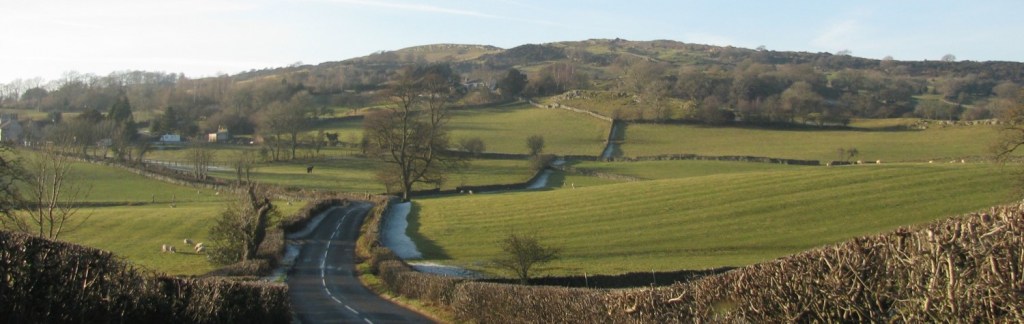
A report on a large-scale survey, including 300 squares each measuring 1km x 1km across Wales, has concluded that woodland and hedgerows provide essential habitats for many of our pollinators. Involving the UK Centre for Ecology and Hydrology, Butterfly Conservation and more than 1,000 landowners, the study revealed that carefully managed woodland and hedgerow creation could play a vital role in regenerating pollinator populations, alongside the restoration of wildflower meadows and organic farming with mass-flowering crops.
As previously reported, populations of British butterflies and other valuable pollinators, have crashed in recent years, and last year’s butterfly count gave the worst results for 12 years; our pollinator populations are therefore in desperate need of assistance. In addition, woodland areas have declined hugely, such that currently only about 13% of our land has any tree cover, so this study provides evidence that these 2 catastrophes are indeed linked.
The report on this new survey concluded that hedgerows and broadleaved woodland, including trees such as oak, maple and flowering shrubs, provide diverse habitats for pollinators, whilst many woody plant species offer food for larvae, as well as pollen and nectar for adult insects. In addition, hedgerows and woodland support breeding sites and shelter for many species. However, it also observed that timber plantations do not possess the required structure or diversity of flowering plants to support pollinators effectively. Moreover, it also made clear that increased areas of natural woodland, with the right mix of tree species, need to be balanced with more wildflower meadows and flowering crops, along with a reduction in intensively farmed grassland areas, to achieve the best outcome.
The Welsh government is already planning to plant 180,000 hectares of new woodland by 2050, as part of its Net Zero Wales plan, and it is hoped that the results of this study will assist in the formulation of parallel incentive schemes for the management of land across the country. We look forward to seeing how this important result will be taken forward to address Wales’ “Nature Emergency”.
 JP Ecological Services