
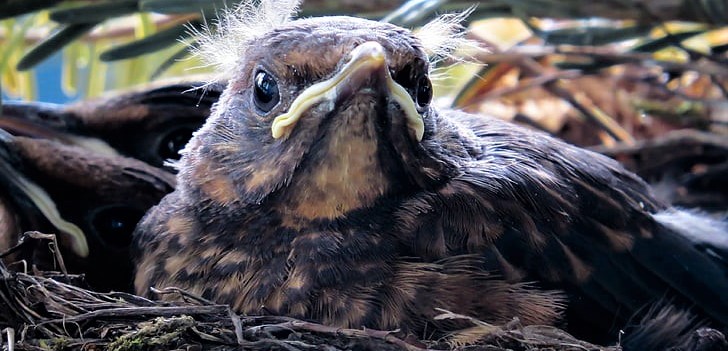
The bird nesting season is now well and truly underway across much of the UK, and, although essential to the preservation of bird populations, this time of year brings additional problems to land managers and development projects. Specifically, the Wildlife and Countryside Act makes it is an offence to intentionally take, damage or destroy the nest of any wild bird whilst it is being built or is in use. Additionally, for some species, it is an offence to recklessly disturb adult birds or their dependent young whilst at their nests. The issue for workers is therefore, “How sure are you that the work you are about to undertake won’t adversely affect an active nest?”
Sadly too, changes in farming practices and land development have significantly reduced the amount of woodland, hedgerow and meadow land available to birds for nesting, so the loss of yet more habitat will continue the decline in bird populations. Ideally, of course, new developments would include existing natural resources, thus reducing the need to remove more nesting sites, and mitigation measures would replace vegetation that had to be lost with alternative habitats, including the short-term use of bird boxes whilst new trees and hedges grow. Nevertheless, the problem of ensuring that bird nests are not damaged or destroyed during development works remains.
Some nest locations are readily apparent at this time of year, because they are large structures built high in trees with noisy birds arguing over the best positions. However, even these might disappear from view as leaves emerge and the parent birds settle into caring for eggs and young. Many other nests, though, will be secreted in holes in trees or buildings, on rafters or ledges or under roof tiles or eaves, whilst others will be deep inside dense shrubs and scrub, even as low down as ground level; some birds might also take advantage of piles of logs or stones to shelter their nests. Furthermore, other birds will nest on the ground, hidden amongst tufts of grass or reeds, whilst yet others will rely on camouflaged eggs and youngsters on open ground, gravel and shingle. Unfortunately, therefore, a “quick look around” often won’t protect workers from breaching the Act, and a systematic nest survey is required to ensure that the potential work area is clear of nesting birds.
Such a systematic search will include monitoring bird activity in the general area, especially for adult birds visiting specific sites with nesting or feeding materials, listening for warning calls from protective adults or the sounds from young birds waiting for their next meal, as well as carefully looking for the nests themselves. In some cases, feeding remains and areas of droppings will also indicate that a nest is nearby.
In simple habitats, managers might sensibly be able to rely on project staff or workers to check for nests before commencing work, but in more complex scenarios, it would be more prudent to seek the assistance of an experienced ecologist or Ecological Clerk of Works to undertake pre-work checks, brief workers on the signs to look out for and to assist with unexpected discoveries. When employed early enough in the project design, ecologists can also advise on mitigation measures and reducing biodiversity loss, so that nature benefits from the project as well as humans. If you need ecological support to ensure your project doesn’t breach the Wildlife and Countryside Act, contact us.
 JP Ecological Services