
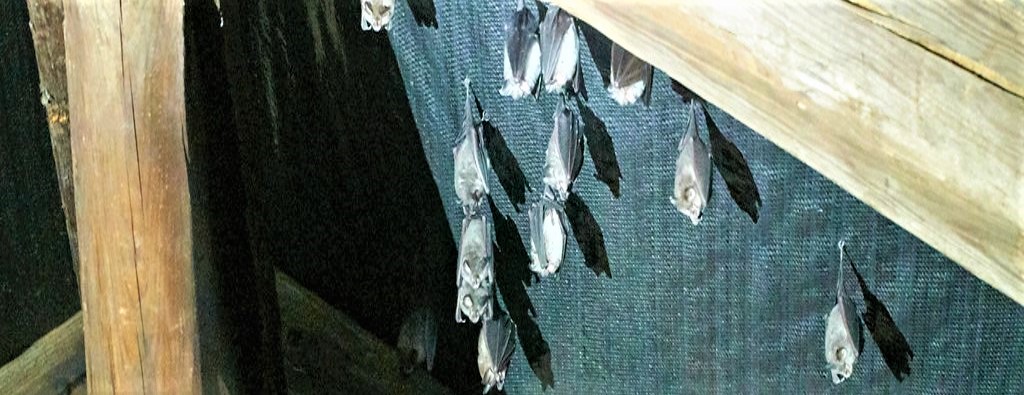
All bats found within the UK are fully protected by law, but because of their nocturnal lifestyle and winter hibernations, most of us rarely directly encounter them. However, the widespread loss of natural roosting habitats means that in fact bats are closer to many of us than we might imagine. We might therefore have bats living in little-used or abandoned buildings, roof spaces, lofts, porches and walls or under roof tiles or cladding and behind damaged fascias and soffits. Some may also be roosting in nearby mature trees. Even then, their impact on our way of life is very low, until we come to modify or refurbish our property. Then we need to be aware of the possible offences we might commit and the penalties that could be incurred.
Dozens of development companies and individuals have discovered in recent years that undertaking work which disturbs bats or destroys their roosts can be very expensive indeed. A small number of examples include:
- Two individuals fined more than £2,000 in Merthyr Tydfil for failing to obtain a Natural Resources Wales licence and protect an endangered species when converting an old drill hall.
- A Bournemouth house-owner fined more than £7,000, including a Proceeds of Crime charge, for demolishing a log store adjacent to his house, after being advised that bats were roosting there. He admitted not having read the ecologist’s report and hadn’t realised he would be committing an offence.
- A Derby developer found to be “negligent at best” and awarded a fine and costs of £10,730 after failing to obtain a licence to remove a long-eared bat roost from offices he was reworking.
- A south London house builder fined £600,000, with £30,000 costs, for undertaking demolition work at a site known to be inhabited by bats. He admitted ignoring advice to provide appropriate mitigation and obtain a Natural England licence.
However, cases like these need never arise, and a Bat Conservation Trust spokesman has advised that, “Having bats in your property is unlikely to prevent you doing what you want to – it’s a case of doing things at the right time and in a manner that doesn’t have a detrimental impact on the bats.”
The safest way to avoid criminal investigations, fines, proceeds of crime charges or even possible custodial sentences, for disturbing bats or their roosts is to seek advice from a licensed bat surveyor on the possible effects of the work you want to undertake on any bats that might be living in or around the development site.
Following completion of a Preliminary Roost Assessment, it might be necessary to undertake emergence/re-entry surveys or even more detailed physical inspections to determine whether and how bats might be using part of the site. Rest assured though that such additional work will only be required if necessary to assure the local planning authorities that appropriate precautions have been taken. If the presence of bats is detected, mitigation proposals will have to be prepared to show how any bats or roosts would be protected during and after the work and a licence to complete the work obtained from the appropriate environmental agency. For survey results to be accepted by local or national authorities, they must be undertaken within specific periods of the year, so careful planning and co-ordination are required.
If we can assist with your project planning to avoid conflict with bats, please contact us.
 JP Ecological Services