A comical moment on a recent survey prompted this blog. Our normally well-prepared team were caught off guard by unpredictable British weather. We were completing a supplemental site walk-through when we spotted a newly traversable route across previously flooded ground to a large tree marked for inspection.
Unwilling to miss an opportunity having managed to get to said tree, our survey demanded an estimate of the girth of the trunk. But of course, our normally trusty tape measure was at this point notable by its absence!
Fear not! The seasoned ecologist has many ways around such a scenario, and one is to note how many arm spans/hugs it takes a colleague to encircle the trunk. Not highly scientific maybe, but enough to offer a rough estimate, and of course amuse the observing team member!
Now, the first rule of tree-hugging, is that the moment you do it, a member of the public will stroll by. Instantly undermining any credibility you had as a serious ecologist (which is why you get a colleague to do it!) Much to the delight of the wider team, this is exactly what happened – so apologies to the traumatised dog-walker. The second rule is that you note down how many ‘hugs’ it takes to get around the whole trunk. This can then be used to estimate trunk girth.
But why go to the effort and risk the dent to your street cred I hear you ask? Predominantly to identify ancient, veteran, and notable trees. Trees within these categories often require special treatment. They may be subject to their own tree protection order or be part of ancient or protected woodland. This additional protection exists and is enforced because these trees are irreplaceable and critical to the surrounding eco-system and biodiversity. As such, they require specific consideration within ongoing management plans.
What is an Ancient, Veteran, or Notable Tree, and Why do they Matter?
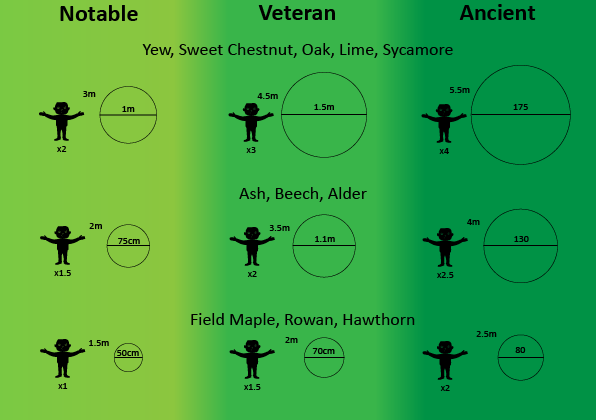
Whilst there are many defining factors, the girth of the trunk is certainly a strong initial indicator of a tree’s status. Growth rates vary based on species and condition; for context, broadleaf trees such as Oak, Ash, Beech, or Sycamore are likely to gain up to 2cm of girth per year when actively growing.
An Oak is not generally considered ‘ancient’ until it is over 5.5m in trunk girth, or (circa 300-400 years), though it may reach ‘veteran’ status by 200 and be a prime example of a ‘mature’ or ‘locally notable’ tree by the tender age of 150. Oaks can have a lifespan of 1000 years, so an ‘ancient’ tree may be less than half-way through its life, and care must be taken not to prematurely remove these specimens.
Ancient Trees
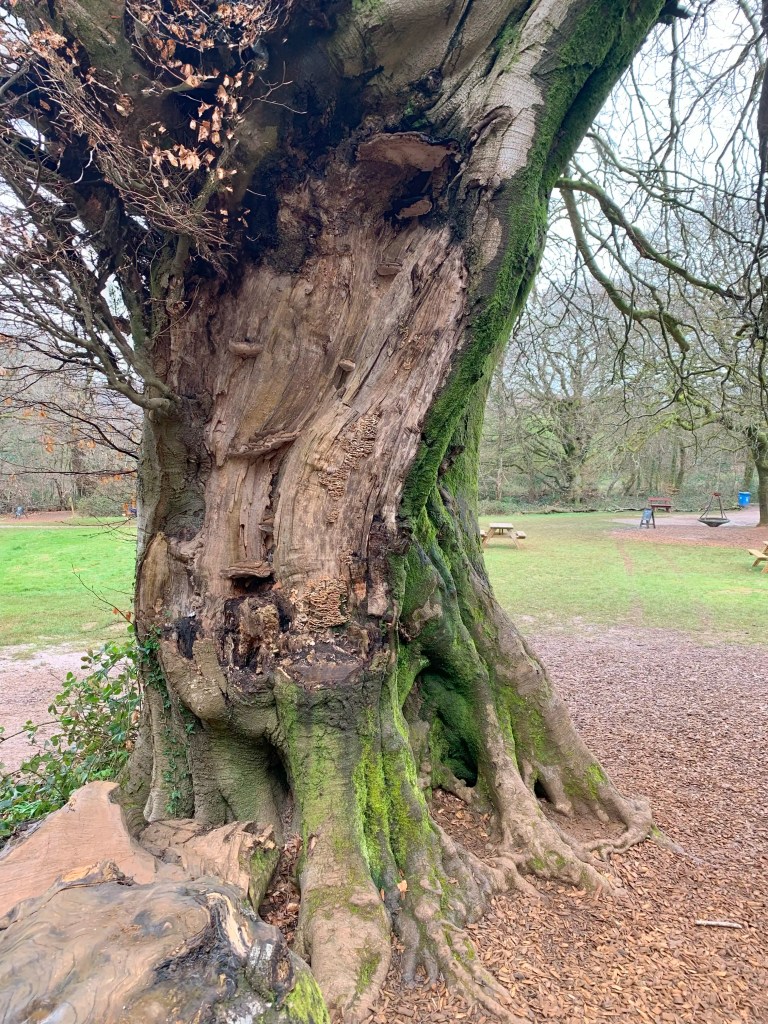
Ancient trees are as they sound, trees that are very old for their species. These trees have progressed through maturity and are in the longest phase of their lifecycle. They can be particularly at risk of poor management, as with retreating canopies and hollowing trunks they can look dead or diseased to the untrained eye. But dead limbs or hollow sections alone are not signs of ill health and provide critical and rare habitats for many species of fungi, plants, insects, and animals.
Overzealous management or risk assessments can result in too much of cut-back of these trees. Whilst safety is key and must not be compromised, there are often solutions that avoid felling or removing large sections.
Where ‘ancient’ trees are concerned, it is better to avoid pre-emptive cutting and to wait until there is a clear chance of risk, rather than acting on the minimal possibility of a future issue.
Of course, the girth of the trunk is far from being the only or deciding factor. A truly ancient tree will look very different to a mature tree. The canopy will be reduced and flattening or growing downwards, there will often be evidence of hollowing or cavities where branches have broken away. There may be pools of water in hollows, where the bark has been damaged or where branches have broken off, or the tree may be obviously host to fungi or other species. You can also look for the characteristic antler-like dead branches.
However, the girth of the trunk can be a strong indicator of whether or not the tree is of specific interest. A thick trunk for the species can, in the very least, be used as a prompt to assess the tree in more detail. For a large species like an Oak, Yew, or Sycamore, an ancient tree is likely to have a girth of over 5-6m (or 3-4 ecologists), where smaller species such as Field Maple or Rowan may only be 3m (or 2 ecologists).
Veteran Trees
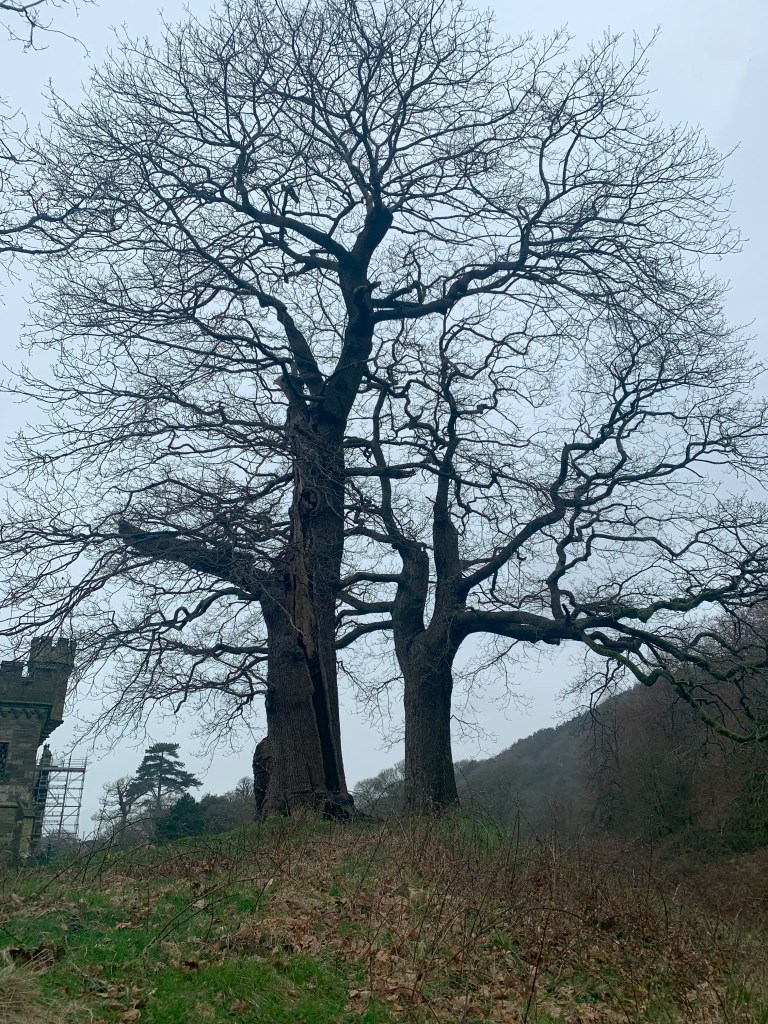
Veteran trees are once again important for the diversity of habitat that they offer. They may be old, but this is not always the case, particularly if they have been exposed to extreme stressors such as drought or lightning strike. These trees might bear many of the same scars as the ancient trees, (dead branches, decay, fungi, or other wounds), only less than an ancient tree.
Many things can accelerate the aging process of a tree, including cultivation or building too close to it, veteran trees are often the older trees in a wooded area. Larger species tend to be considered ‘veteran’ at around 4m girth, and smaller species from 2m.
Veteran trees should also be considered in a management plan, particularly if there are large numbers that are becoming damaged through accelerated incidents, as this can be a sign that something is seriously threatening the area. Veteran trees often host dead wood, and this is key to many of the species that depend on them. As with ancient trees, the necessity of removing these limbs should be confirmed before cutting commences. Any listings or protections on the trees should also be noted, as well as considering calling out specific trees on the management plan if necessary.
If you are managing a publicly accessed area, veteran trees can be key to making it attractive to visitors. In addition to being essential sources of food and accommodation for the local wildlife. These trees may not seem like they need such active management, as they appear healthy with little to no deadwood. However, they should still be regularly inspected to ensure that they remain healthy. The nature of your site and the trees will determine your inspection schedule, with older trees in high-access areas requiring more frequent attention.
Notable Trees
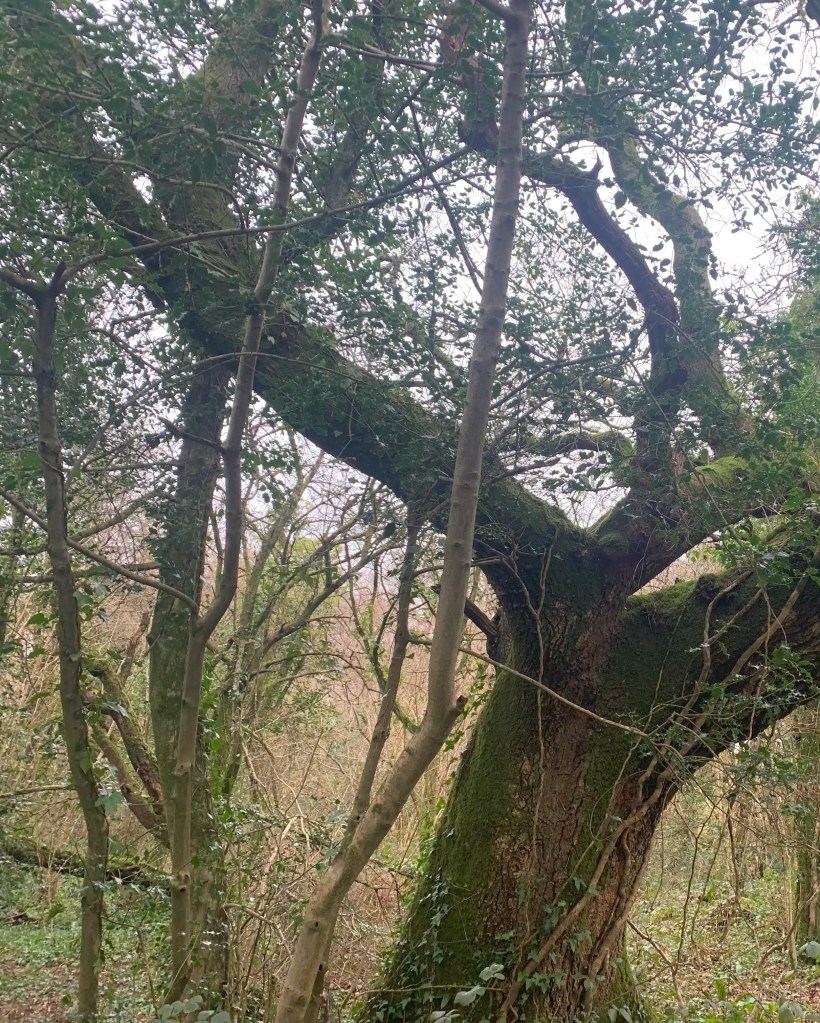
A notable tree may not be the oldest example of its species, but it is likely to be a mature tree in its prime, and it may well be a veteran in terms of the immediate locality. They could be the tallest trees with the most impressive canopies. They could even be really large examples of trees, where the years have been kinder, and they therefore do not exhibit the typical characteristics of dead branches and scarring that their ancient and veteran counterparts exhibit.
These trees are not only impressive examples and the ‘flagships’ of your woodland area, but they are the next generation of veterans.
Deadwood
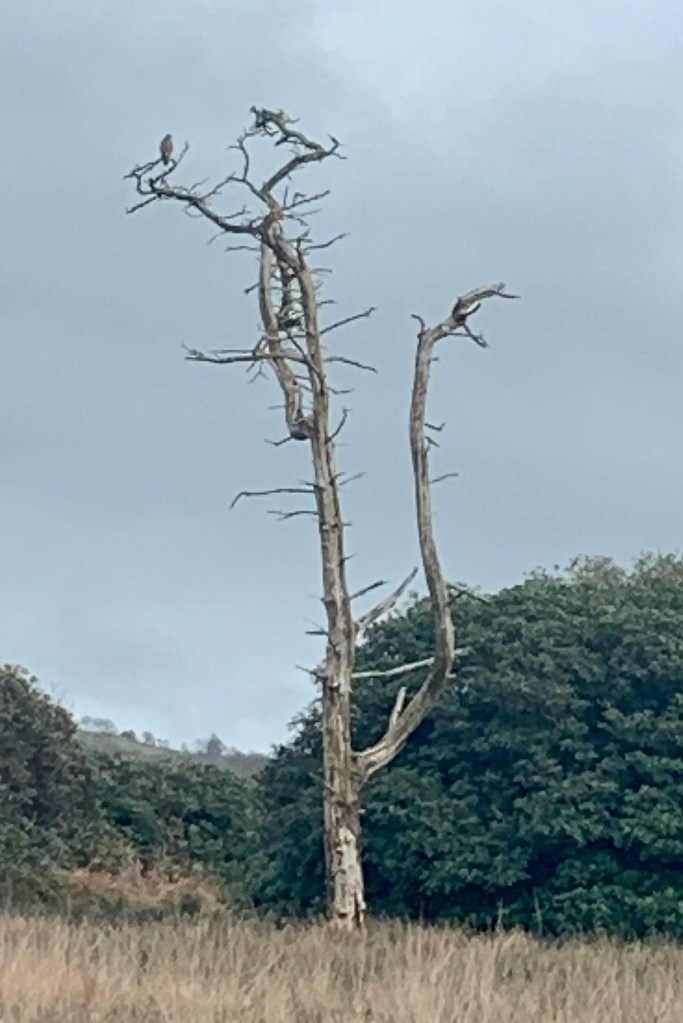
Counter-intuitively, ecologists are very interested in deadwood, both standing and fallen due to the ecological diversity it supports.
It is critical to be aware of any significant trees within an area that you are managing, and the great thing is that they are generally easy to spot as you move around a site.
Ancient trees are of great importance to our countryside and, as a result, they are recorded and monitored by a number of different organisations.
If you think that you have ‘ancient’, ‘veteran’ or ‘notable’ trees on your property or within a publicly accessible area, you can register them with the Woodland Trust for assessment. Of course, at this point you will need a proper tape measure and a camera, but don’t forget to take a snap of the hug that began it all!
Looking for bespoke woodland management plans or advice on how to care for or develop around protected or noted trees? Give us a call or drop us a message to ask how.
For other articles, please see “Index of Articles”. For information on the work we can do, please see “Our Services”.
 JP Ecological Services