
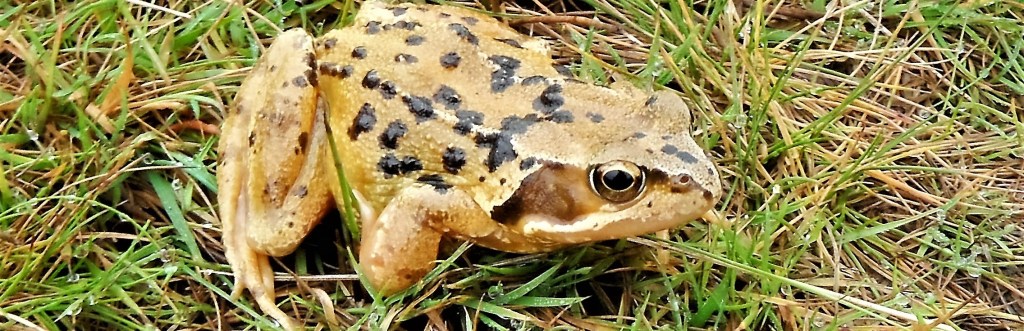
Some UK amphibians are fully protected species and/or priority species under biodiversity action plans, so surveys, mitigation measures and management plans could be required for development projects. This page outlines what might be involved in surveys and preparing mitigation proposals, whilst examples of how we have assisted project teams are available elsewhere. If you want to discuss how we might help with your project, please contact us.
Key Info
- Great crested newts and Natterjack toads are fully protected under the Wildlife and Countryside Act 1981.
- Common Toads, Common frogs, Smooth newts and Palmate newts have limited protection under the same Act.
- Great crested newts, Natterjack toads and Common toads are all Priority species under the UK Biodiversity Action Plan and should be considered during planning and development.
- Surveys for Great crested newts require a licence from the appropriate environmental agency. For more details of GCN surveys please refer to this page.
Surveys
Amphibians are generally found in or around standing water such as ponds and ditches, although they can travel large distances from water. They usually hibernate in winter to protect themselves from the cold with frogs generally becoming active first followed by toads and newts in the spring.
Amphibians might also shelter during poor weather throughout the rest of the year, so surveys are best undertaken when the weather is dry, with air temperature >5oC, water temperature >10oC and little wind.
Between 4 and 6 surveys within the period March to September may be required to detect presence of amphibians or to confirm their absence within a water body.
Surveys might include:
- Searches of local ecological records for any history of presence in and around the area.
- Searches for eggs/spawn (toads/frogs, Mar – Apr; newts, Apr – Jun). Artificial egg strips might be employed for newt surveys.
- Looking for tadpoles/efts (newts, Aug – Sep)
- Netting in areas around vegetation at edges of water bodies (adult newts, Mar – May, juvenile newts, Aug – Sep).
- Searching by torchlight in and around water body (adult newts, Mar to Jun; juvenile newts, Jul – Sep).
- Inspection of natural refugia, such as logs and stones (Mar – Sep).
- Installation and monitoring of artificial refugia panels (Mar – Sep).
- Bottle trapping (newts, Mar – May).
- Environmental DNA testing.
 JP Ecological Services