
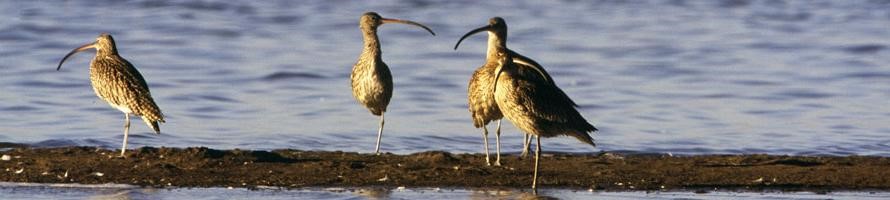
Development projects which might affect protected bird species will require survey reports to demonstrate that the design of the project has taken account of the affected species as part of obtaining planning permission. This page outlines what might be involved in surveys and preparing mitigation proposals, whilst examples of how we have assisted project teams at Llanelli are available elsewhere. If you would like to discuss the need for bird surveys as part of your development plans, please contact us.
Key Info
- Some birds are fully protected by Schedule 5 of the Wildlife and Countryside Act (1981).
- All wild birds, including their nests and eggs are protected by law, whilst some species have additional protection specifically when nesting. It is an offence to knowingly and recklessly disturb breeding birds or their nests, eggs and offspring.
- Some areas have protected habitats specifically for the use of birds and thus require survey and mitigation submissions if affected.
Surveys
Bird Nesting Surveys.
Bird nests come in a wide variety of shapes and sizes, dependent on the species, and might be lodged in tree branches, holes within trees or buildings and other structures, shrubs, areas of scrub, redundant equipment or even on the ground. Although different bird species will breed at different times, usually in line with improved weather and availability of food for their brood, and some species will have only one batch of eggs whilst others might have several, the general bird-breeding season is broadly taken as between March and September.
Wintering Bird Surveys. The geographic location of the UK means that many thousands of birds migrate to here to escape the much harsher winters of Scandinavia, Europe and islands on the borders of the Artic. Whilst some species spread themselves over large areas of countryside on arrival, others congregate in large numbers on estuaries and adjacent areas.
Surveys will sometimes be required by the planning authority to ensure that these over-wintering birds are not adversely affected by proposed developments. Such surveys will be required throughout the winter months (November to February) over at least 2 winter seasons, and reports need to detail the species, the numbers of birds and the use that they make of the area. Mitigation measures may need to be included in the planning proposal before approval will be granted. Part of our work at Llanelli involved wintering-bird surveys, amongst others.
Migrating Bird Surveys. A large number of bird species use areas of the UK as staging posts on their long migration journeys, principally in the spring and autumn, resting and feeding in order to complete their onward travels. Often, these initial resting places are in coastal regions and in estuaries, from which the birds move on to the next stage of their journey or disperse across wider areas of the countryside. The timings of their arrival at these resting grounds vary with species and with the weather experienced along their route. The usual timings for migratory bird surveys are between March and May and again between September and November. Advice will usually need to be sought from the appropriate environmental agency or county ecologists on whether such surveys might be needed, in particular if the project involves wind turbines, and the number of visits required to complete the survey satisfactorily.
Survey Content. Such bird surveys might include:
- Searching ecological databases to determine the species of birds that have been recorded at the site or in the adjacent countryside.
- Examining the topography and habitats on and around the site to determine which species could use the proposed development site.
- Determining the locations of any protected areas or ecologically special sites which might be affected.
- Liaison with the BTO, RSPB or other authoritative bodies, county bird recorders and local bird-watching organisations on historical use of the local area by birds.
- Consultations with the appropriate environmental agency, eg Natural England, Natural Resources Wales or the Scottish Environment Protection Agency.
- Conducting regular visits to the site, perhaps for a number of seasons, to record the species seen and their specific activity.
- Assessing whether mitigation measures are appropriate to reduce the impact of the development on the birds.
Some of the above activities might be completed during the Preliminary Ecological Assessment, but the more detailed elements will normally require in-depth surveys, specifically focused on the species considered under threat.
 JP Ecological Services