
Key Info:
- It is illegal under Schedule 9 of the Wildlife and Countryside Act to plant, or otherwise cause, a number of different plant species to grow within the different nations of the United Kingdom.
- The associated rules also include the movement of these plants, roots or their seeds from one site to another by whatever means, and therefore might have a significant impact on the activities involved in developing an area of land.
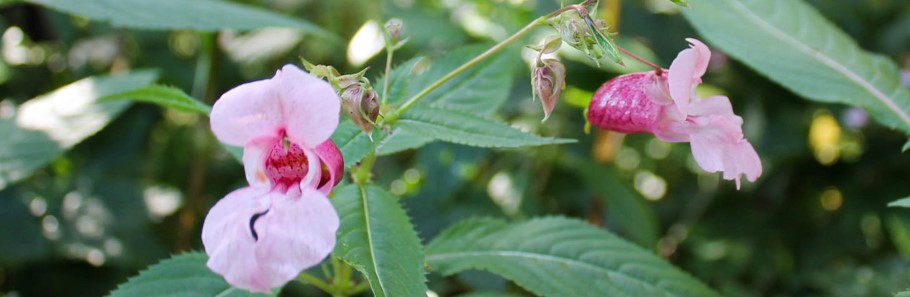
Often the presence of invasive non-native plants will be discovered during a Phase 1 Habitat Survey or Preliminary Ecological Appraisal of the proposed development site. However, planners and project managers will often need more detail of the species involved, including its distribution and density, in order to plan and complete ecologically acceptable removal and disposal actions and to prevent plants or seeds being transferred to other locations. A report on the handling of invasive non-native species, including appropriate ecological mitigations, may be required before planning permission is granted. The species most commonly encountered include Himalayan Balsam and Japanese Knotweed.
Furthermore, some Invasive Non-Native Species have harmful substances within their roots or sap and it could be necessary to ensure that workers are equipped with appropriate Personal Protection Equipment.
Our Invasive Non-Native Species surveys might include:
- The identity, distribution and density of problem species within or adjacent to the proposed site.
- Maps or charts showing species distribution.
- Measures to be adopted when working on the site to prevent transference.
- Processes and mitigations to be adopted in removing and disposing of the species.
- Advice on special measures to be taken to cope with plants that might cause harm to workers.
There are similar rules associated with the control of invasive non-native animals and creatures, although the discovery of such species often isn’t as easy as that of plants. Nevertheless, our ecologists will advise on measures and mitigations required in respect of any species of such animals or creatures once their presence has been confirmed.
 JP Ecological Services