
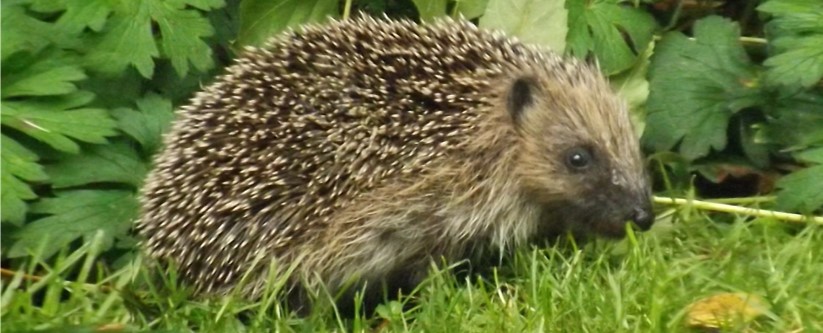
The Hedgehog is a partially protected species, so it and its habitats might need mitigation measures and management plans to be considered throughout all phases of development projects. This page outlines what might be involved in surveys and preparing mitigation proposals, whilst examples of how we have assisted project teams are available elsewhere. If you want to discuss how we might help with your project, please contact us.
Key Info:
- Hedgehogs (Erinaceus europaeus) are currently protected under UK legislation, in so far as they are:
- Listed on Schedule 6 of the Wildlife and Countryside Act (1981) which makes it illegal to kill or capture wild hedgehogs.
- Listed under the Wild Mammals Protection Act (1996), which prohibits cruel treatment of hedgehogs.
- A species of ‘principal importance’ under the NERC Act, which is meant to confer a ‘duty of responsibility’ to public bodies.
- The British Hedgehog Preservation Society recently categorised hedgehogs as “vulnerable to extinction” – addition to Schedule 5 of the Wildlife and Countryside Act (1981) would make it a legal requirement to survey for them and undertake mitigations against the effects of changes to land use.
- Hedgehogs are listed as a Priority Species on the UK Biodiversity Action Plan.
- The hedgehog has long been regarded as Britain’s most popular mammal, so regional ecologists and environmental agencies might request surveys or mitigation plans to protect hedgehog populations.
Surveys
Hedgehogs are normally only active at night and spend much of the year in hibernation, so surveys for hedgehog presence must be undertaken between May and November.
Our surveys for hedgehogs might include:
- Checks of local ecological records for sightings within a reasonable distance of the proposed development site.
- Visual checks of the site for field signs – droppings, footprints, likely access holes or routes.
- The use of baited tunnels positioned along typical hedgehog routes to detect the footprints of animals passing through.
- The use of IR trail cameras to record the passage of animals, in conjunction with statistical analysis of the data to estimate population size, if required.
- Other forms of surveying using high-powered torches or involving catching and tagging of animals, but these can be costly and also require a licence issued by the appropriate environmental authority.
Survey reports would include the results of the field-work along with recommendations for mitigations to eliminate or reduce the impact of the development project on the hedgehog population.
Our surveys are conducted in accordance with practices and techniques approved by national ecological and nature conservation organisations, environmental agencies and regional ecologists.
 JP Ecological Services